
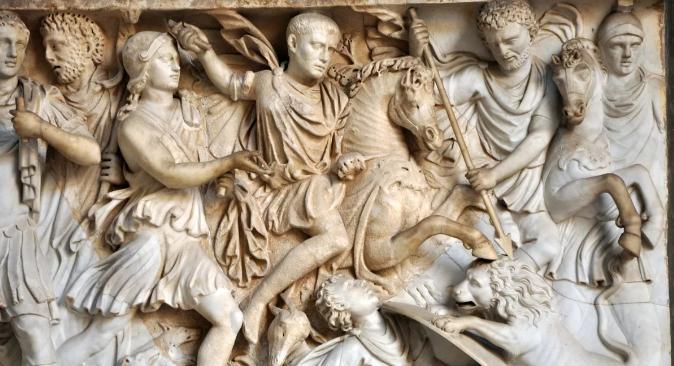
I went to a Lutheran high school many years ago. One of the subjects was “Classical Culture,” which dealt with religion and culture before and after Christianity. The Greeks and Romans had countless gods and goddesses. It seems as though there was at least one for every aspect of living – from agriculture to family to eating, drinking and being merry. Each god had a purpose. It must’ve been hard to keep track of all of them. As shown in the above photograph, these gods were made of stone, unlike the living, breathing triune God, Jehovah. Their images were all over the place reminding people who they should worship. Many felt if they led a good life, the benefits would follow.
Because the Jews moved around so much and were often held in captivity, they were influenced by various other religions. They also had various sects within their own religion. Both Mary and Joseph were from the lineage of King David. They followed the laws of the Old Testament and devoutly studied the scriptures each day. They would have insisted on that within their family. The command to raise a child in the way he should go was a way of life for them. The Word was necessary for the spiritual growth of each member of the family. The head of the house would lead the family in this process.
The Pharisees were the upper class, wealthy part of Jewish society. They were considered Separatists. The name Pharisee comes from the Hebrew word, persahin which means, separate. This particular sect was educated in the law of Moses and deemed it necessary to follow it to perfection, yet they sometimes manipulated it to suit their own personal needs. During Jesus’ ministry, the Pharisees felt threatened, because His words held great authority. The Pharisees were losing control. The plot to get rid of Jesus began soon after He gained popularity with the people.
The Essenes resided near the Dead Sea. They were not materialistic so weren’t wealthy. Their position on the Law was to keep it perfectly. They were considered isolationists. The historian, Josephus, described Essenes as strict observers of the Sabbath. They also followed every dietary law and would do so even under threat of death. They are not mentioned in scripture by name. They believed in the immortality of the soul, following the law to the letter and remained celibate.
The Scribes were not really a sect, but an occupation. Since these men were skilled in reading and writing, they were able to teach others from the Scriptures. They could also write down the events of the time and keep a history of the church. They were prosperous, because of their knowledge. They would be first and foremost a Rabbi (teacher,) but they also served as arbitrators within the community.
The Sadducees were the intellectuals, philosophers, the deep thinkers. They probably came into being during the Greek occupation of Israel. Bits and pieces of Grecian culture began to infiltrate their thinking. They were obedient to the Torah, but like the Pharisees, they manipulated the law to their advantage. They were part of the elite element of society. John, the Baptist, referred to both the Sadducees and Pharisees as a brood of vipers. Jesus also addressed them as hypocrites and a wicked and adulterous generation. Both groups had turned their belief system into a money-making business rather than a place where the true God would be worshipped.
The Zealots were considered nationalist militants. They were against Roman rule, because they believed that God was their only king. They acted as armed insurgents in defense of the temple. They were referred to as rebels, bandits, activists and troublemakers, but they eventually overthrew Roman rule and provided sovereignty for Israel. One of Jesus’ disciples, Simon, was a zealot before following Jesus.
The Jews were waiting for a Messiah – a Savior – a king would make their lives easier. They had been promised this by God; through the covenant He made with them long before. Christians believe that the Messiah came to earth to dwell among us – to pitch His tent with us – to walk in the sandals of the average person. He wasn’t what the Jews wanted, but many followed Him, because of His message of peace. Jesus would teach, lead, work alongside, look inside of people’s hearts and offer them forgiveness of all their sins. He died to make that happen and rose again to show His authority as King of Kings. We now wait for His return.
THANK YOU, JESUS, FOR ANOTHER DAY! WE LOOK FORWARD TO YOUR SECOND COMING!
–


 atimetoshare.me
Thank you for this informative piece – well written.
LikeLiked by 1 person
Thank you Ken.
LikeLike